The Lonely Military-Industrial Complex
Inspired by and in response to Stephen Walt. He questions the reasons and need for the United States to spend as much on defense as the rest of the world combined.
The global imbalance in defense spending towards the U.S. is the product of several factors. The most important have been the demilitarization of other advanced economies and the strength within American society of the National Security state and the military-industrial complex. The resources the U.S. commits to defense, while a huge imbalance internationally, is not unusual by American standards since 1945.

Europe (and Japan): where have all the soldiers gone?
The tendencies towards demilitarization within the developed world (Western Europe, Japan) have long been underway. Obviously in Germany and Japan, post-World War pacifism and guilt have been important. In countries like France, the U.K., Belgium and the Netherlands, military power was undermined by its consistent failure to maintain long-term colonial domination in the 1950s and 1960s. The trend really became pronounced with the end of the Cold War, when the security of European states was fundamentally assured, and they could engage in a vast demilitarization. Now European and Japanese defence spending tends towards a near-negligible 1% of GDP, with the exceptions of Great Britain and France with their lingering Great Power aspirations. The fact that even if a major European country invested more substantially in their military, they would lack the ability to undertake autonomous action of any real interest anyway (not counting the odd British and French adventures in Africa..).
In what was once the place of the ‘other’ vast military-industrial complex, the former Soviet Union, the end of the Cold War was the critical factor. Russia no longer needs to invest (waste) so much of its national wealth into military forces to control Eastern Europe or participate in the nuclear arms race. Add to that that the Soviet/Russian economy collapsed in 1989-1991, and you understand why that country no longer factors into the equation.
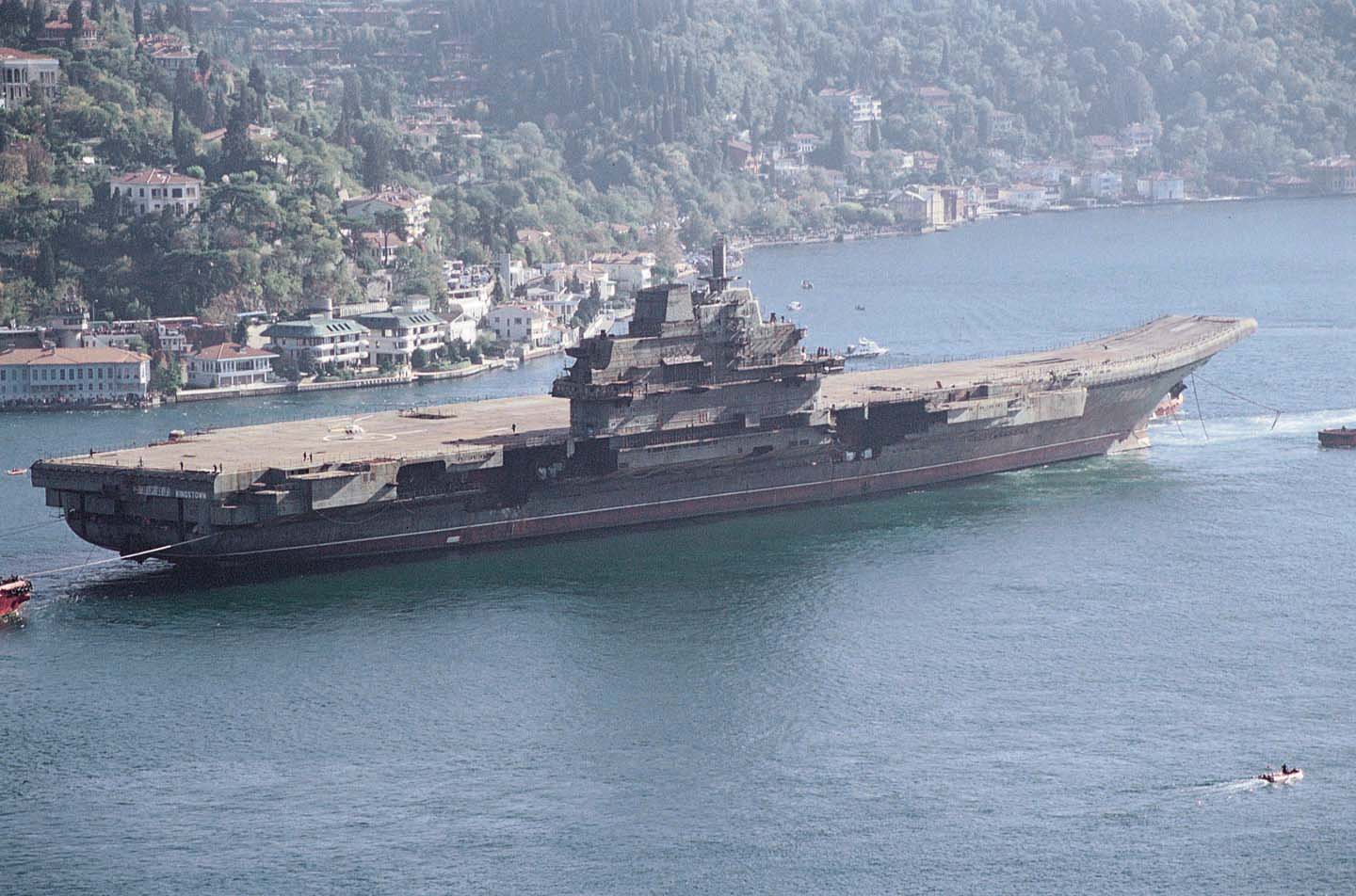
China is still attempting to have a working aircraft carrier. This, the ex-Soviet Varyag, is currently undergoing repairs by the Chinese.
China is the only rising economy that might rival the U.S. eventually in terms of defense spending. I suspect they will have both the potential and the interest in the mid-term future, but we are not there yet.

Unheard of..
So the 'spending more than the rest of the world' factoid is somewhat misleading. It is not that the U.S. is all that militarized by most standards. This is not Wilhelmine Germany, interwar Europe, or even Ronald Reagan's America (about 6% of GDP to the military). It *is* high by today's global standards, mainly because other poles of military power - Western Europe, Japan, Russia - have demilitarized massively. The United States is the last country in the world today seriously interested in projecting substantial military might abroad.

..and normal.
I don't know if 4% of GDP is too high. Certainly, given the size of the U.S., its economy, its scientific successes, this has meant that there has been a rampant and sickening technophilia in the U.S. military. It has been evident since the Cold War, with officers and congressmen seeming to think all their security problems can be resolved by atomic bombs, Huey helicopters, smart bombs, stealth bombers and more 137.5 million-dollar fighter jets… In my opinion, one can trace a straight line in thinking between losing in Vietnam despite dropping more bombs on Southeast Asia than the whole of those exploded in WW2 with the idea that Rumsfeld's "military revolution" would mean Iraq would be a cakewalk.
U.S. military power means our leaders will, every so often, misuse it. Whether this is because of hubris or miscalculation is irrelevant. Assuming no general war, in 20 or 30 years, I am convinced there will be American boys fighting a losing war in some other godforsaken corner of Asia. This is part of what the Founding Fathers' feared. America was meant to be different from Europe, with its vicious circle of power-hungry princes and ravenous wars.

Civil War: an American exception
America has not succumbed to despotism, but it has embraced a very European tradition of permanent semi-war footing, and military adventurism. This was literally un-American before 1941 and has been normal since. (And, to counter the arguments of a Bob Kagan: there were obviously American wars in the 19th Century, even expansionist ones, but there was no peacetime conscription or vast military establishments as in Europe.) So we have this ironic symmetry: the U.S. was exceptional before the Second World War for being the only civilian power, it has been exceptional since the end of the Cold War for being the last military power.
I think we could benefit from an honest and open debate on the issue of American military power. If only so that, every four years, we do not have these ridiculous pissing matches between presidential candidates as who is willing to be ‘stronger-on-defence’ by throwing yet more money at it... without ever detailing which programs in particular make the United States more secure. Although, to be frank, I doubt the country is capable of such a discussion. The fact that so many in our media and political elite portrayed the new defense budget - representing a 4% increase - as a cut seems to confirm this. At least Bob Gates seems committed to reorienting in a more useful manner the necessary curse of organized violence.
The global imbalance in defense spending towards the U.S. is the product of several factors. The most important have been the demilitarization of other advanced economies and the strength within American society of the National Security state and the military-industrial complex. The resources the U.S. commits to defense, while a huge imbalance internationally, is not unusual by American standards since 1945.
Europe (and Japan): where have all the soldiers gone?
The tendencies towards demilitarization within the developed world (Western Europe, Japan) have long been underway. Obviously in Germany and Japan, post-World War pacifism and guilt have been important. In countries like France, the U.K., Belgium and the Netherlands, military power was undermined by its consistent failure to maintain long-term colonial domination in the 1950s and 1960s. The trend really became pronounced with the end of the Cold War, when the security of European states was fundamentally assured, and they could engage in a vast demilitarization. Now European and Japanese defence spending tends towards a near-negligible 1% of GDP, with the exceptions of Great Britain and France with their lingering Great Power aspirations. The fact that even if a major European country invested more substantially in their military, they would lack the ability to undertake autonomous action of any real interest anyway (not counting the odd British and French adventures in Africa..).
In what was once the place of the ‘other’ vast military-industrial complex, the former Soviet Union, the end of the Cold War was the critical factor. Russia no longer needs to invest (waste) so much of its national wealth into military forces to control Eastern Europe or participate in the nuclear arms race. Add to that that the Soviet/Russian economy collapsed in 1989-1991, and you understand why that country no longer factors into the equation.
China is still attempting to have a working aircraft carrier. This, the ex-Soviet Varyag, is currently undergoing repairs by the Chinese.
China is the only rising economy that might rival the U.S. eventually in terms of defense spending. I suspect they will have both the potential and the interest in the mid-term future, but we are not there yet.
Unheard of..
So the 'spending more than the rest of the world' factoid is somewhat misleading. It is not that the U.S. is all that militarized by most standards. This is not Wilhelmine Germany, interwar Europe, or even Ronald Reagan's America (about 6% of GDP to the military). It *is* high by today's global standards, mainly because other poles of military power - Western Europe, Japan, Russia - have demilitarized massively. The United States is the last country in the world today seriously interested in projecting substantial military might abroad.
..and normal.
I don't know if 4% of GDP is too high. Certainly, given the size of the U.S., its economy, its scientific successes, this has meant that there has been a rampant and sickening technophilia in the U.S. military. It has been evident since the Cold War, with officers and congressmen seeming to think all their security problems can be resolved by atomic bombs, Huey helicopters, smart bombs, stealth bombers and more 137.5 million-dollar fighter jets… In my opinion, one can trace a straight line in thinking between losing in Vietnam despite dropping more bombs on Southeast Asia than the whole of those exploded in WW2 with the idea that Rumsfeld's "military revolution" would mean Iraq would be a cakewalk.
U.S. military power means our leaders will, every so often, misuse it. Whether this is because of hubris or miscalculation is irrelevant. Assuming no general war, in 20 or 30 years, I am convinced there will be American boys fighting a losing war in some other godforsaken corner of Asia. This is part of what the Founding Fathers' feared. America was meant to be different from Europe, with its vicious circle of power-hungry princes and ravenous wars.
Civil War: an American exception
America has not succumbed to despotism, but it has embraced a very European tradition of permanent semi-war footing, and military adventurism. This was literally un-American before 1941 and has been normal since. (And, to counter the arguments of a Bob Kagan: there were obviously American wars in the 19th Century, even expansionist ones, but there was no peacetime conscription or vast military establishments as in Europe.) So we have this ironic symmetry: the U.S. was exceptional before the Second World War for being the only civilian power, it has been exceptional since the end of the Cold War for being the last military power.
I think we could benefit from an honest and open debate on the issue of American military power. If only so that, every four years, we do not have these ridiculous pissing matches between presidential candidates as who is willing to be ‘stronger-on-defence’ by throwing yet more money at it... without ever detailing which programs in particular make the United States more secure. Although, to be frank, I doubt the country is capable of such a discussion. The fact that so many in our media and political elite portrayed the new defense budget - representing a 4% increase - as a cut seems to confirm this. At least Bob Gates seems committed to reorienting in a more useful manner the necessary curse of organized violence.
Labels: military, military-industrial complex, Stephen Walt, United States
posted by CJWilly at 12:49 PM
0 comments